
Wellness real estate is a $548B market but not only for developers
how to enter this space without starting from zero
Hola amigos,
In times of tension and uncertainty, wellness stops being about indulgence.
It becomes more basic than that: safety, stability, clear thinking, good sleep, solid recovery, and the ability to stay connected to the people around us.
That is why I keep coming back to environments.
The rooms we work in.
The buildings we live in.
And that is why this matters for you.
The question is no longer whether wellness is growing in the UAE.
We already know it is.
The real questions are:
Where do I fit?
How do companies buy this kind of work?
Can I move into this space without starting from zero?
That conversation is worth having.
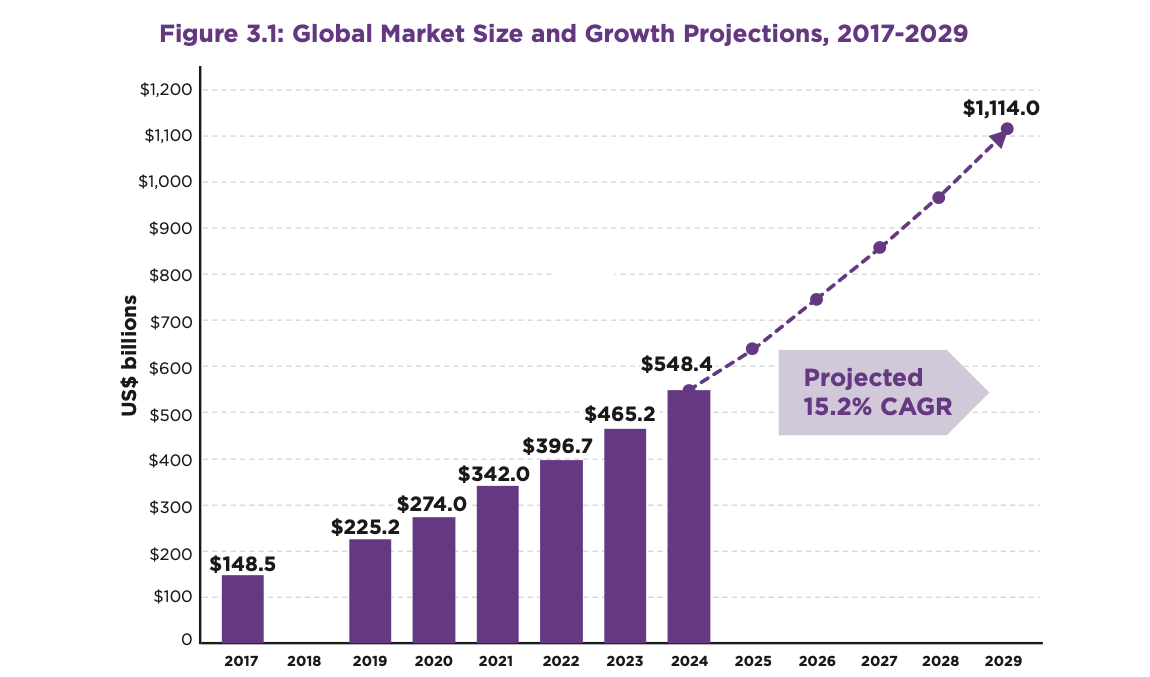
Global wellness reached $6.8 trillion in 2024, and wellness real estate, at $548.4 billion, has been the fastest-growing segment of that economy over the last five years.
So this issue is not another trend round-up.
It is a practical map for consultants, designers, brokers, strategists, workplace leaders, hospitality operators, and practitioners who want to move from one-to-one work into something bigger.
One of the most overlooked opportunities in the UAE wellness boom is wellness real estate.
In this issue, I’ll cover three things:
What wellness real estate actually is
Why it matters now in the UAE
Where professionals beyond property can credibly play.
1. Wellness is moving from service to infrastructure
For years, wellness in the Gulf was easy to read.
Spa, luxury, beauty, and recovery as a premium add-on.
That picture is becoming outdated.
The deeper shift is that wellness is moving into the built environment itself.
Not just what happens inside a space, but how that space is conceived from the beginning: light, air, movement, community, and the small frictions that shape daily life.
That is why wellness real estate is so important.
At its core, it is about designing, building, and operating places that support people’s health in a fuller sense. Not just physically, but mentally, socially and environmentally too.
And once wellness moves from product to place, the market becomes much bigger than clinicians and coaches.
It starts to belong to the people who can shape environments.
2. Why wellness real estate matters now
This is no longer a niche corner of the market.
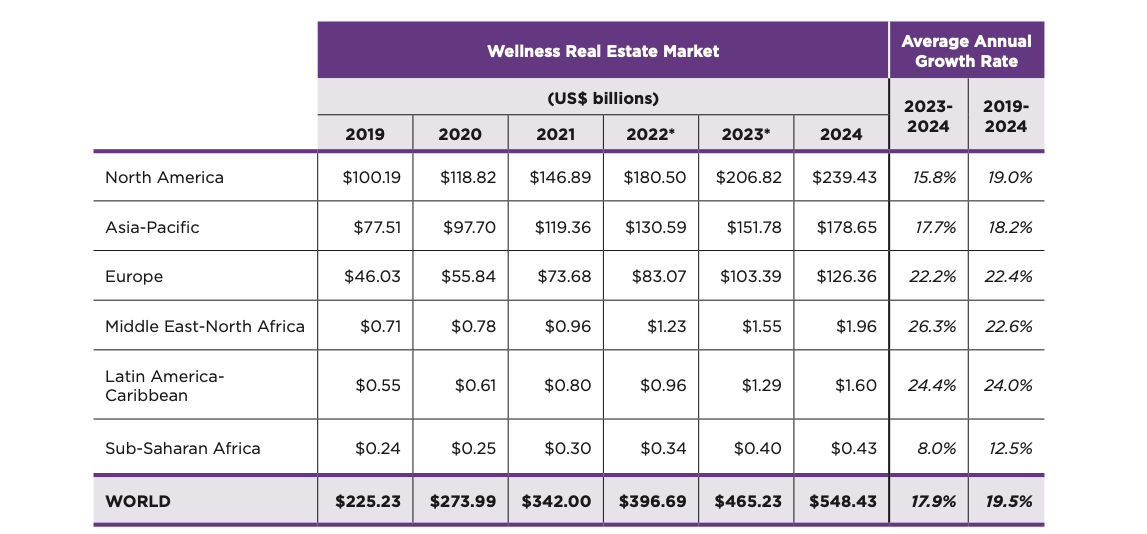
Wellness real estate has become one of the fastest-growing parts of the global wellness economy. That alone makes it worth paying attention to. But the more important point is why it is growing.
Because people are no longer only buying products or treatments. They are becoming more aware of the environments that shape how they feel every day.
How they sleep.
How they recover.
How stressed they feel.
How connected or depleted daily life leaves them.
The UAE market already understands premium living and hospitality but now needs a more mature layer: people who can make that experience healthier, more credible, and more commercially defensible.
And that is where the opportunity opens.
The strongest work in this category is much more structural. It reduces friction, supports better behaviour, builds stronger communities, and creates places that people genuinely feel better living and working in.
3. This is not only for developers
When people hear real estate, they assume the opportunity belongs to developers, architects and maybe brokers.
It is way broader than that.
If your work helps shape how people live, work, recover, connect or move through space, you are already in this market.
A consultant can help a developer turn a broad idea into something practical.
A workplace advisor can help make an office work better for the people using it.
A designer can shape spaces that feel better to live in, work in, and move through.
A broker can talk about more than price and layout. They can explain why a place actually feels good to be in.
A brand strategist can help a project explain its wellness angle without sounding forced.
A hospitality operator can bring the space to life with the right experiences, services, and partners.
That is the bigger opportunity.
Not everyone needs to become a “wellness expert””
But more professionals will need to understand how wellbeing translates into space, operations, value, and demand.
4. The commercial case
One reason this category matters is that it is not running on vibes alone.
There is a serious commercial argument behind it.
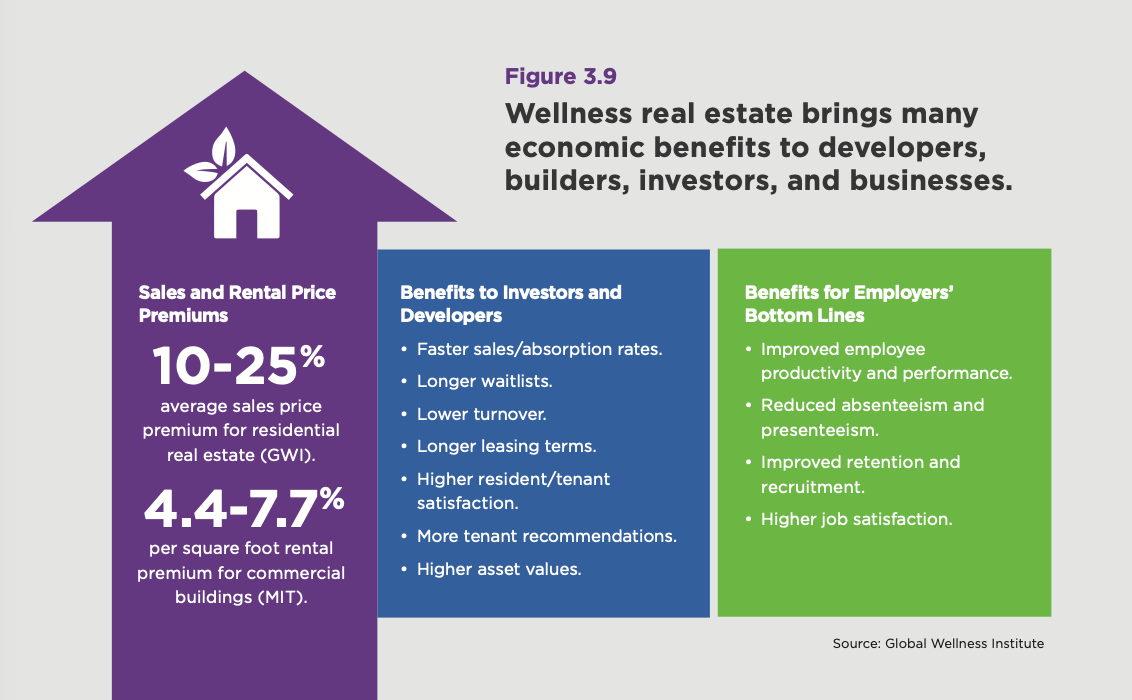
Projects in this space are increasingly associated with stronger pricing, stronger differentiation, stronger tenant and buyer appeal, and stronger long-term asset value.
The value is not only in what gets built but also in how clearly that value is understood and communicated.
That is why this matters even if you never plan to design a tower or sell a penthouse.
The money is not only in construction.
It is in translation.
The professionals who will do well here are the ones who can connect health to experience, experience to desirability, and desirability to commercial value.
5. The real bottleneck is translation
This is what I keep seeing in our readers as well.
Some are leaving corporate jobs and do not want to make a naïve leap.
Some are already building wellness but do not understand how companies make decisions or how to package what they do.
Some are excellent one-to-one practitioners but worry they are not “corporate enough” for bigger rooms.
Different backgrounds. Same friction.
They do not lack conviction.
They lack a bridge.
And wellness real estate may become one of the most important bridges because it creates work that sits between wellbeing and business.
That is why this topic matters beyond property.
It gives adjacent professionals a credible way in.
What comes next
Up to this point, the case should be clear.
The opportunity is real.
The market is growing.
And the opening is much wider than most people think.
But that still leaves the practical questions.
Where exactly do professionals enter?
Which roles are actually credible?
Where is the real demand likely to sit?
How do you position yourself without drifting into vague language or borrowed authority?
That is what the rest of this issue is for.
For less than 1 AED a day, the rest of this issue gives you the practical side of the opportunity:
Where the strongest entry points sit
How to position your value if you are adjacent to wellness rather than inside it
The questions to ask before you attach your name to any project.
I’m also sharing five working prompts across strategy, design, brokerage, brand, and operations.
The upside here is not abstract. It could help you shape a stronger consulting offer, open the door to a new role, sharpen a client pitch, or help you spot the kind of project worth saying yes to.
A clearer path to work that can actually turn into a contract, a client, or a job.
Keep reading with a 7-day free trial
Subscribe to Wellness Intelligence to keep reading this post and get 7 days of free access to the full post archives.