
The new wellness opportunity: readiness
the world changed and your work needs to catch up

Ready Is the New Well
How Readiness Became the Next Wellness Shift
Hola amigos,
First off, I hope you and your family are safe.
This week reminded me of something simple: when the world gets noisy, your job is to protect your bandwidth. On Sunday I took my family to a farm in Ras Al Khaimah for exactly that. Quiet, grounded, present. I’m holding on to that.
Here’s what I want to share today:
The world isn’t just stressed.
It’s dysregulated.
And that difference changes what your clients need from you and what the smartest wellness professionals are starting to build.
If you work in health and wellness, pay attention. This shift affects your positioning.
A few numbers to anchor this:
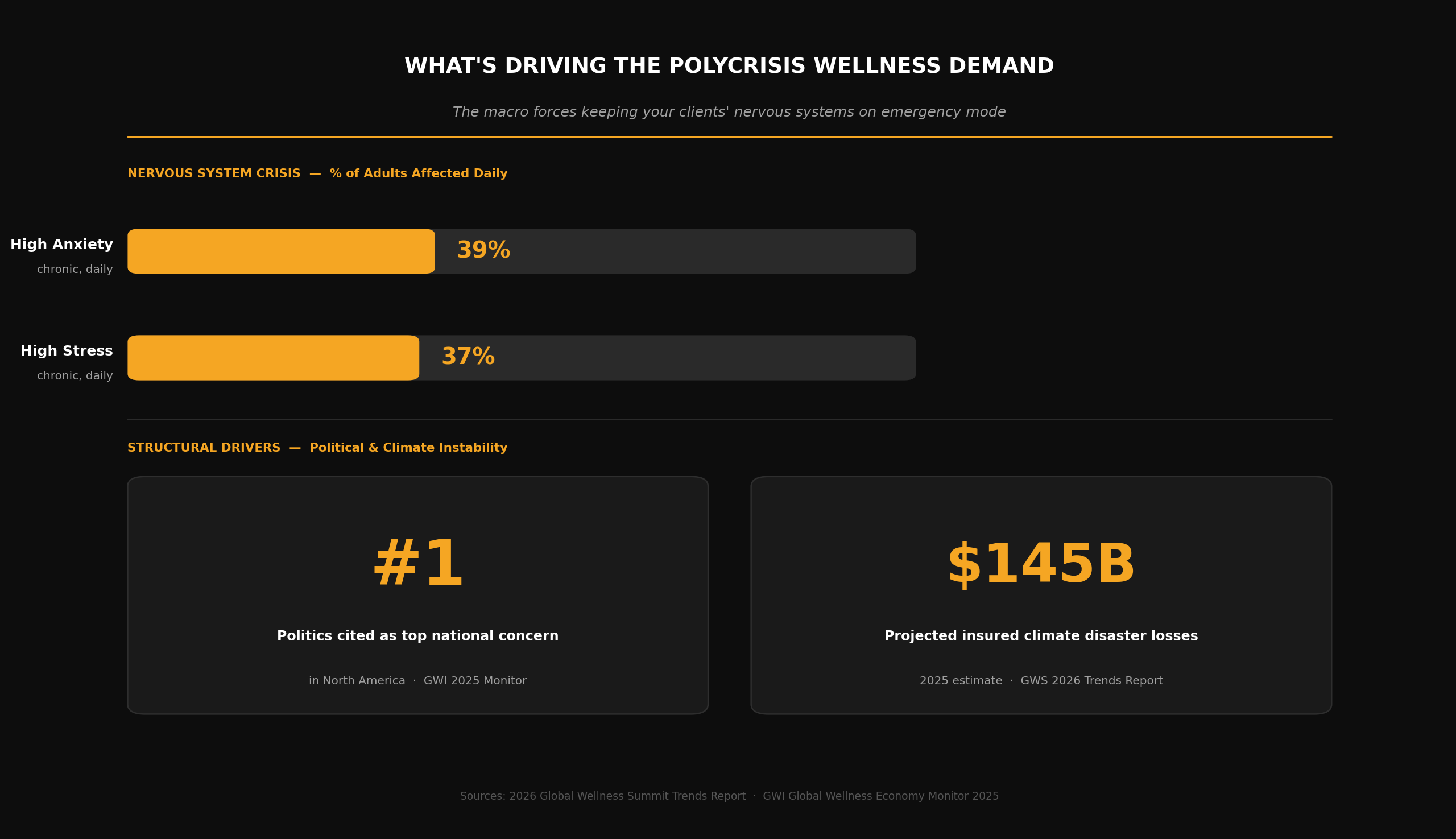
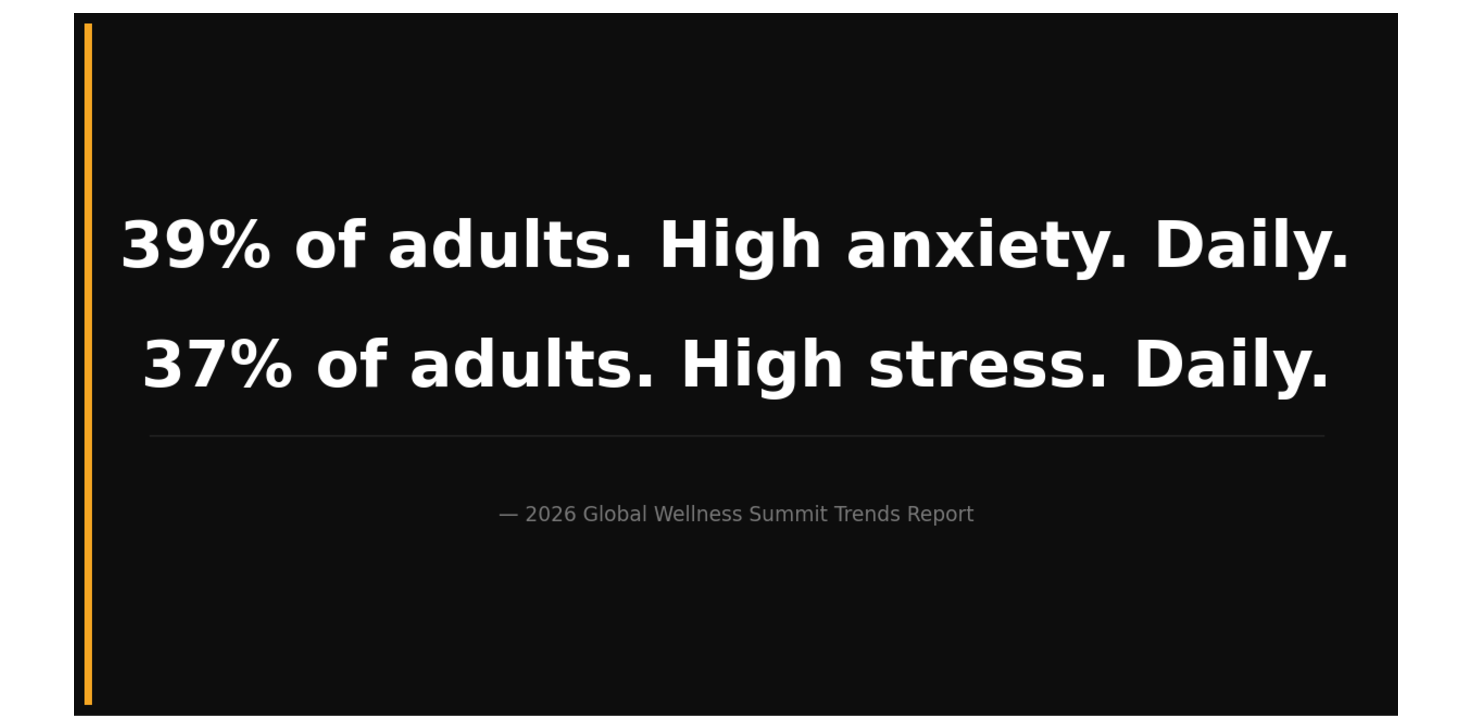
39% of adults experience chronic high anxiety
37% report high stress every single day
Mental wellness is a $268B sector growing at 12.4% annually
(Source: Global Wellness Summit Trends Report 2026; GWI 2025 Monitor)
The tools aren’t failing, amigos. The framing is.
We’ve spent the last decade selling optimization: biohacking, peak performance, personal transformation. It worked — until the world stopped feeling like a place you could optimize from, and started feeling like a place you have to stay steady inside.
In 2024 alone, there were 151 record-breaking climate disasters. Political instability is now the #1 cited national concern in North America. Work insecurity is the #2 global concern. Institutional trust is eroding.
People aren’t just burned out. They’re running their nervous systems on emergency mode.
The 2026 Global Wellness Summit Trends Report names this shift with four words that should reframe your practice:
Ready Is the New Well.
Just as preventive medicine transformed healthcare, disaster readiness is becoming the next evolution of wellness, where having a contingency plan is as foundational as having a fitness plan.
3 Things You Need to Understand Right Now
1. Wellness Has a New North Star: Readiness
For decades, wellness promised protection from disease, burnout, and aging.
The next wave promises something different: the capacity to hold up under pressure.
Having a readiness plan, physical, financial, communal, is being reframed as preventative health.
If your practice is still positioned around “feeling better,” you’re behind where demand is moving.
2. Your Clients’ Nervous Systems Are Living in High Alert
Chronic instability, digital overload, and economic uncertainty keep the nervous system locked in fight-or-flight, not episodically. Chronically.
Neurowellness isn’t about stress reduction anymore. It’s about regulation and recovery before breakdown. Vagus nerve work, parasympathetic activation, somatic practices, these aren’t luxury add-ons. They’re becoming infrastructure.
3. Political Discontent Is Now a Health Determinant
“Politics and government” is the #1 cited concern in North America and the third most cited national problem globally (median 8%). Work and employment are the #2 global concern (median 10%).
Institutional distrust is a real physiological stressor shaping how your clients sleep, eat, decide, and connect.
No wellness protocol works if it ignores the environment people are living in.
You now understand why the market is shifting.
Paid subscribers get the practical playbook below for AED 1/day.
If you’re a wellness professional trying to build stable revenue without chasing clients, this is for you:
The exact language shift that repositions your services (without rebuilding your offer)
The 3-Tier Framework (Individual → Team → Organization)
The 5 underprovided service categories with the highest demand
Why community is the most underused resilience lever — and the easiest to build into an offer
Upgrade to unlock the full framework ↓
Keep reading with a 7-day free trial
Subscribe to Wellness Intelligence to keep reading this post and get 7 days of free access to the full post archives.