
I want to create a corporate wellness program in the UAE but where do I start?
5 questions every wellness professional is afraid to ask in 2026

Hola amigos,
The DMs have been coming in fast.
That’s why I did not want to wait to provide you value ASAP.
Different names, different countries, different backgrounds, but the same five questions, worded slightly differently, show up again and again.
A family doctor in Dubai.
A yoga teacher who wants corporate contracts.
A hospitality professional at a career crossroads.
A data analyst transitioning into wellness.
A corporate professional who wants to combine what she knows with what she loves.
By the end of this brief, you will understand:
Why the corporate wellness market is contracting while the broader wellness economy accelerates
What companies are actually buying (and what they’ve stopped funding)
Whether your background qualifies you to work in this space
Let’s get into it.
1. “Is the corporate wellness market dying?”
No.
But the traditional model is.
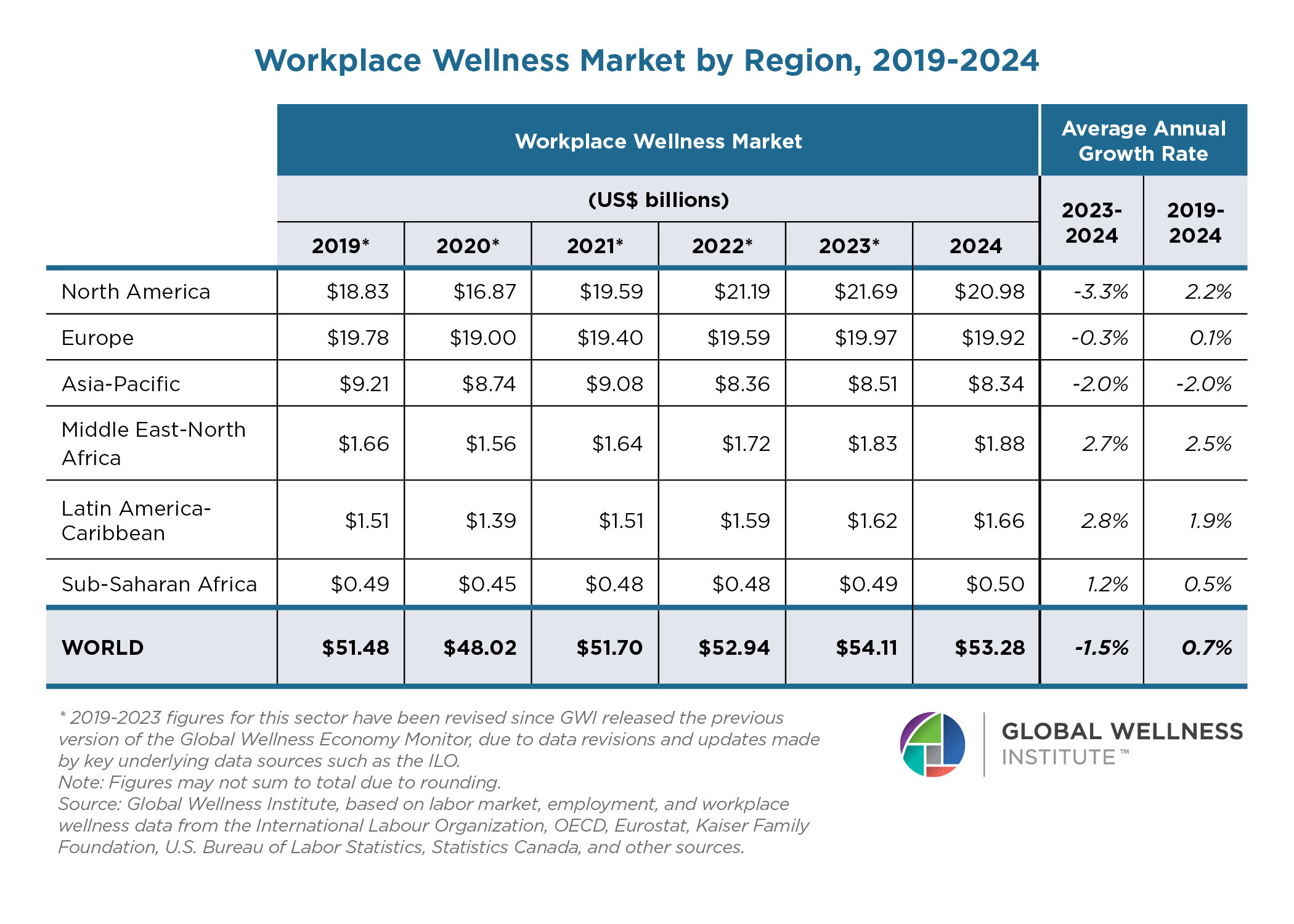
The global workplace wellness market shrank 1.5% in 2023–2024.
According to the Global Wellness Institute’s 2025 Economy Monitor, this is the only major wellness sector recording active contraction — not slow growth, but negative movement.
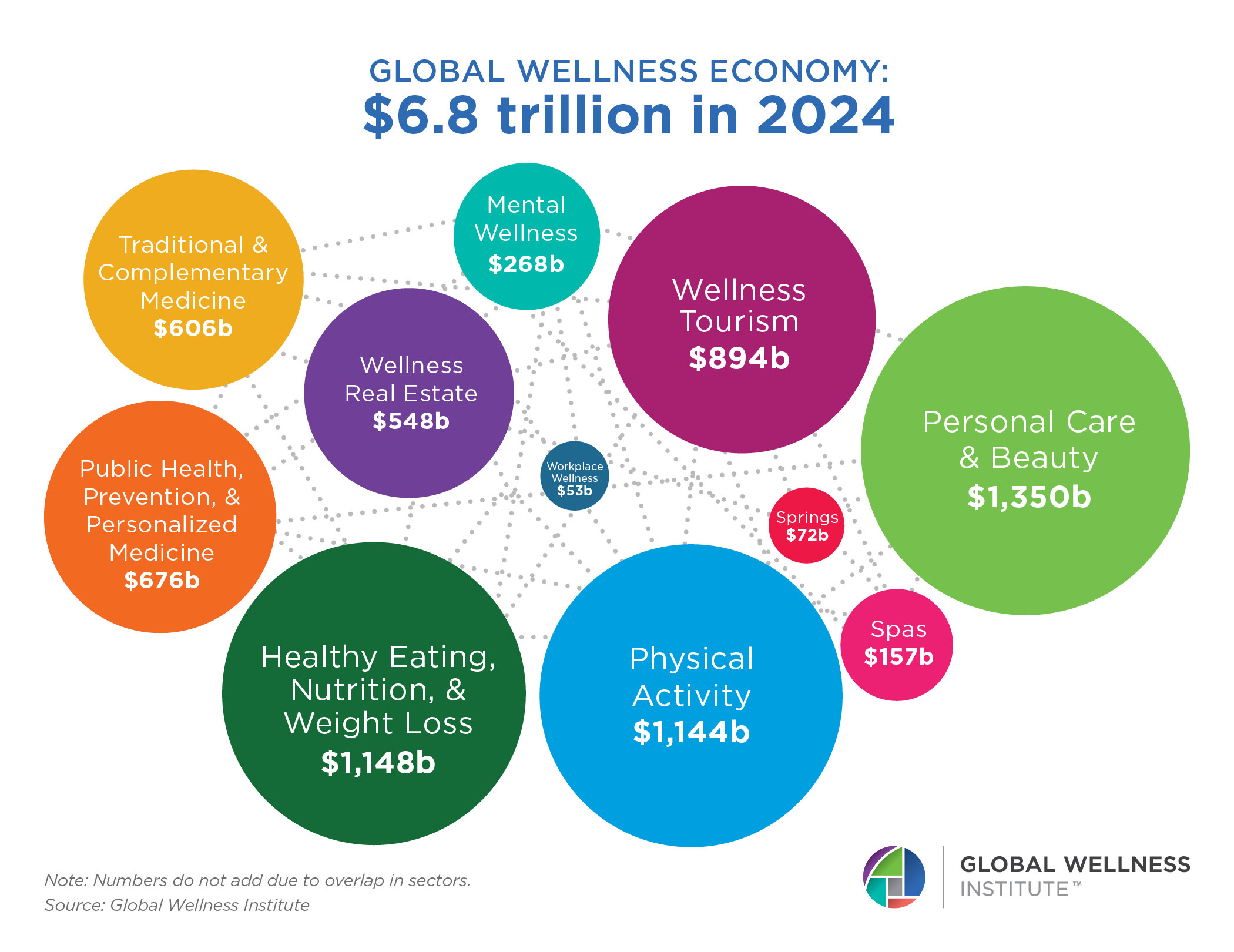
North America, the world’s largest market, fell 3.5% year over year. Asia-Pacific declined 2.0%. Meanwhile, the broader wellness economy grew 7.9% in the same period and now represents $6.8 trillion globally.
That gap — between 7.9% growth and -1.5% contraction — tells you something specific. Companies are not cutting wellness. They are changing what they buy.
The Global Wellness Institute cites a 2024 Harvard Business Review study that found insufficient evidence that traditional programmatic wellness spending is effective.
That finding is now reaching executive leadership.
The programs companies bought for three years are being questioned at budget reviews. What replaces them is not the same thing at a lower price.
It is a fundamentally different category.
2. “Is there any market where corporate wellness is actually growing?”
One.
The Middle East and North Africa.
MENA is the only major region where workplace wellness grew in both the short term (2.7% in 2023–2024) and the medium term (2.5% compound annual growth rate from 2019 to 2024).
Every other major region either contracted or stagnated in the same periods.
The mental wellness picture is even sharper.
MENA recorded a 14.1% mental wellness growth rate in 2023–2024 — the highest single-year rate of any region globally, according to the Global Wellness Institute’s 2025 Economy Monitor.
The GCC is not a secondary market for corporate wellness. It is currently the only growing market in the world.
Organizations across the UAE, KSA, and the wider region are building wellness infrastructure for the first time—and they are looking for professionals who can lead that from the inside.
Most of the professionals I speak with in this region don’t know that.
They’re still calibrating their ambitions against the North American or European market data, where the story is contraction.
The MENA story is different.
3. “I’m a yoga teacher / PT / nutritionist — do companies want what I do?”
Companies don’t buy modalities.
They buy outcomes.
A yoga teacher who describes her work as a “yoga class” is selling into a discretionary HR budget that gets cut the moment earnings miss.
A yoga teacher who positions the same work as a musculoskeletal resilience protocol—reducing the leading physical cause of employee absenteeism— is selling into a risk management budget that does not get cut.
The work doesn’t change. The language does.
This trend is the most consistent pattern I see from inside corporate: wellness professionals with deep expertise being dismissed in budget meetings not because their work doesn’t work but because they can’t connect it to the language executives use to make funding decisions.
The language executives use is risk, cost, retention, and productivity. The executives' focus is not on wellbeing, balance, or mindfulness.
Only 9.8% of the world’s workers have access to any workplace wellness program, according to the Global Wellness Institute’s 2025 Economy Monitor.
That number is down from 10.1% in 2023 — the lowest in five years.
The market is not too crowded.
It is too narrow.
The professionals who can take wellness into organizations that have never had it, in language those organizations understand, are entering a near-empty field.
4. “I’ve spent years in corporate—does that count for anything in wellness?”
It is the qualification.
I hear this from HR directors, operations managers, and people and culture leads who have been doing wellness work on the side of their corporate role and wondering whether they have to start from scratch.
They don’t.
The gap in this industry is not related to wellness knowledge.
The gap is the ability to navigate corporate governance, understand how budget decisions are made, speak the language of risk and performance, and build a business case that survives a CFO.
Every year of corporate experience involves training in exactly that.
The professionals who are building sustainable careers in corporate wellness right now are the ones who combine wellness understanding with corporate fluency.
Neither half alone is sufficient.
The combination is rare—and the rare things get paid accordingly.
The question is not whether your corporate background counts.
The question is whether you know how to activate it.
5. “I want to create a corporate wellness program in the UAE — where do I start?”
Most people start with the program.
That’s the wrong place.
The program is the last thing you build.
The first thing you build is the business case, the argument that connects your intervention to a cost or risk that the organization already cares about.
Without that, the program doesn’t get funded.
With it, the pprogramalmost doesn’t matter as much as the framing around it.
The sequence matters:
First:
Identify the specific operational problem the organization has—absenteeism, cognitive performance, attrition, or physical risk.
Name it in financial terms.
A company doesn’t have a “burnout problem.”
It has a talent retention cost and a productivity drag that can be quantified.
Second:
Connect your intervention directly to that problem.
Not as a benefit to employees—as a solution to business costs.
Third:
Build the measurement framework before you start.
Define what success looks like in language the CFO will recognize.
Not “participants reported feeling better.”
Something like a 12-month comparison of absenteeism rates in the cohort versus a baseline.
What follows is the framework that changes how you walk into that conversation.
Three moves.
Exact language.
The version I use in global corporate wellness conversations, not the conference version.
If you've been standing at the door of corporate wellness wondering how people actually get in, stay funded, and build something that lasts, this is the answer.
Less than 1 AED a day.
Keep reading with a 7-day free trial
Subscribe to Wellness Intelligence to keep reading this post and get 7 days of free access to the full post archives.