
$6.76 trillion but $27 an hour
80% quit within a year. And it's not their fault

Hola amigos,
I hope Wellness Intelligence does two things for you.
One, it helps you get paid for what you already know.
Two, it gives you a moment to unplug from the noise and see the bigger picture.
Over the past 16 months, I have been writing my book The Evergreen Company.
The book is built for HR leaders and wellness professionals who are tired of watching wellness get funded one quarter and cut the next.
It is about making wellness a cornerstone of how a company operates.
It will be on shelves this month.
Stick around to the end—I'll tell you how to get a free copy.
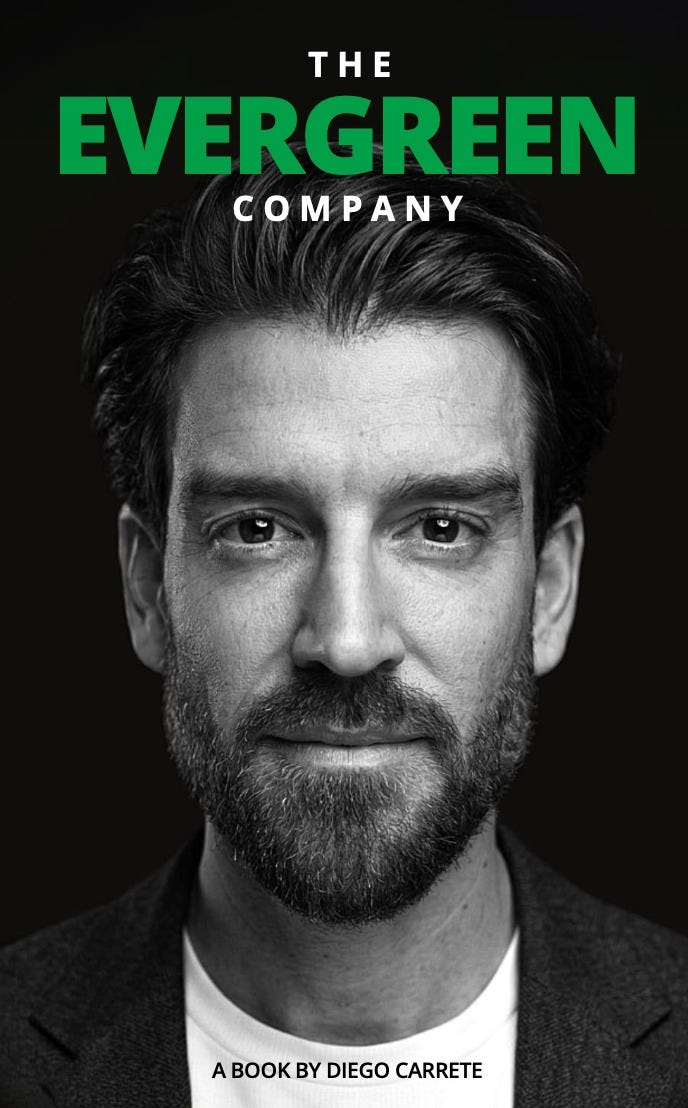
The reason I wrotethis book is in the numbers.
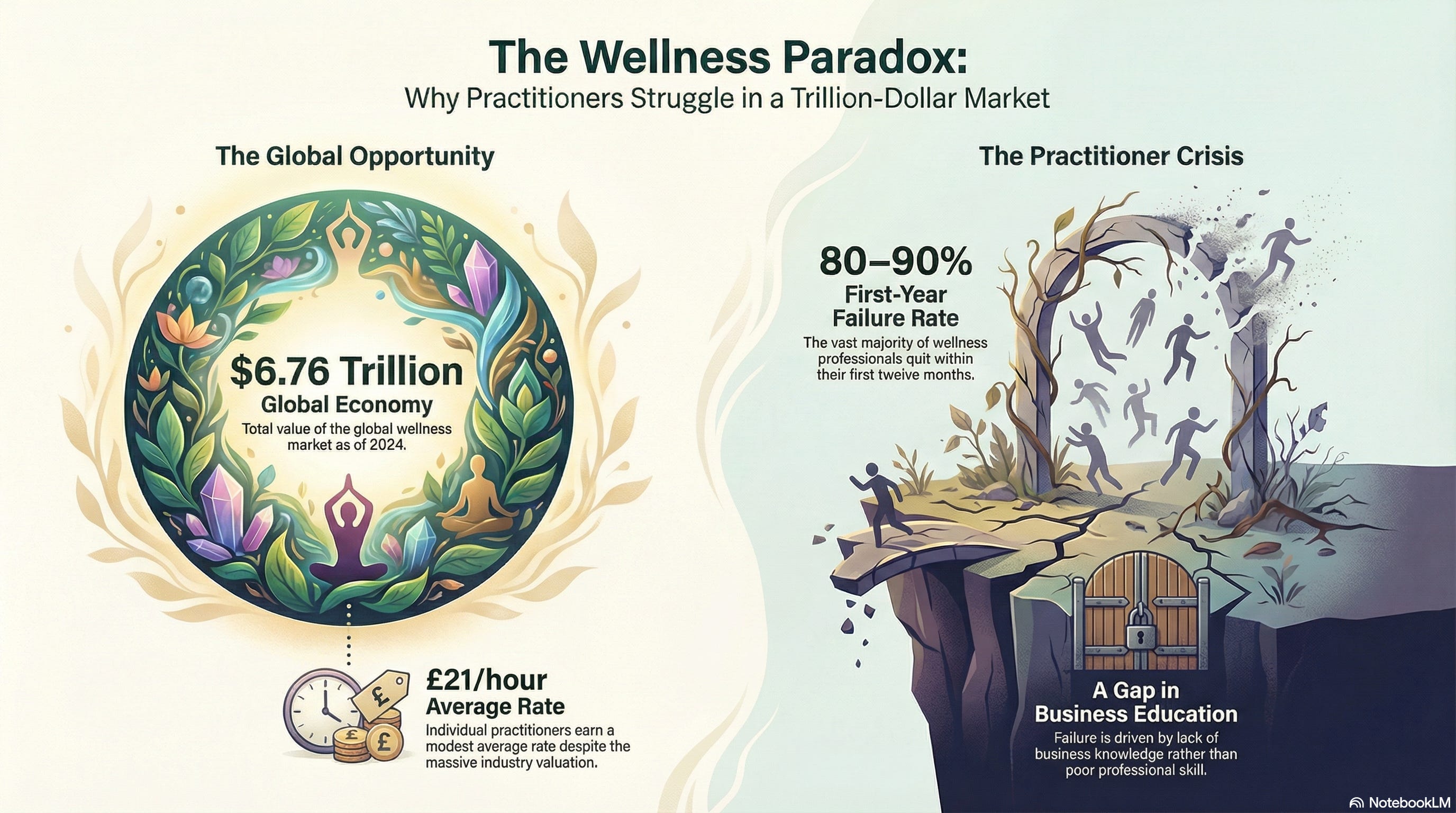
The global wellness economy is worth $6.76 trillion.
It doubled in 11 years.
It is larger than the entire IT sector, bigger than tourism, and bigger than pharmaceuticals.
But the people delivering it are quitting within 12 months.
I know.
I was one of them.
The practitioner crisis nobody is talking about
Here is what the data looks like from the other side of the wellness economy:
82% of personal trainers surveyed say getting clients is as hard — or harder — than it was a year ago.
Almost 90% of newly qualified practitioners quit within their first year.
Not because they were bad at their jobs.
Because nobody taught them the other job — the one that keeps the lights on.
The average trainer earns roughly $27 per hour.
Many work 60-hour weeks.
There is no salary floor, no safety net during slow periods, and no career ladder that doesn’t involve coaching more people for the same rate.
I have been on that side of the data.
I did not fall into personal training—I chose it.
After three degrees and a clear path in corporate, I went to the gym floor instead.
I remember walking through 45-degree Dubai heat to train a client for $30 an hour — then cooking his meals so I could cook my own at the same time.
That was the business model.
Trade your hours, cook someone else's food, and hope the calendar stays full next month.
A few years later, I was training executives at 5am.
They saw their trainer.
What they did not know is that I was out-earning most of them from the gym floor.
I understood both worlds before I entered them.
Meanwhile, the response from the industry is
get another certification
spend $6,000 on a new credential
learn more science
add another set of letters after your name
The certification industry has convinced an entire profession that the gap between them and a sustainable career is knowledge.
It is not.
The practitioners are not under-qualified.
They are under-positioned.
And the problem is not limited to solo trainers.
The corporate side is broken too
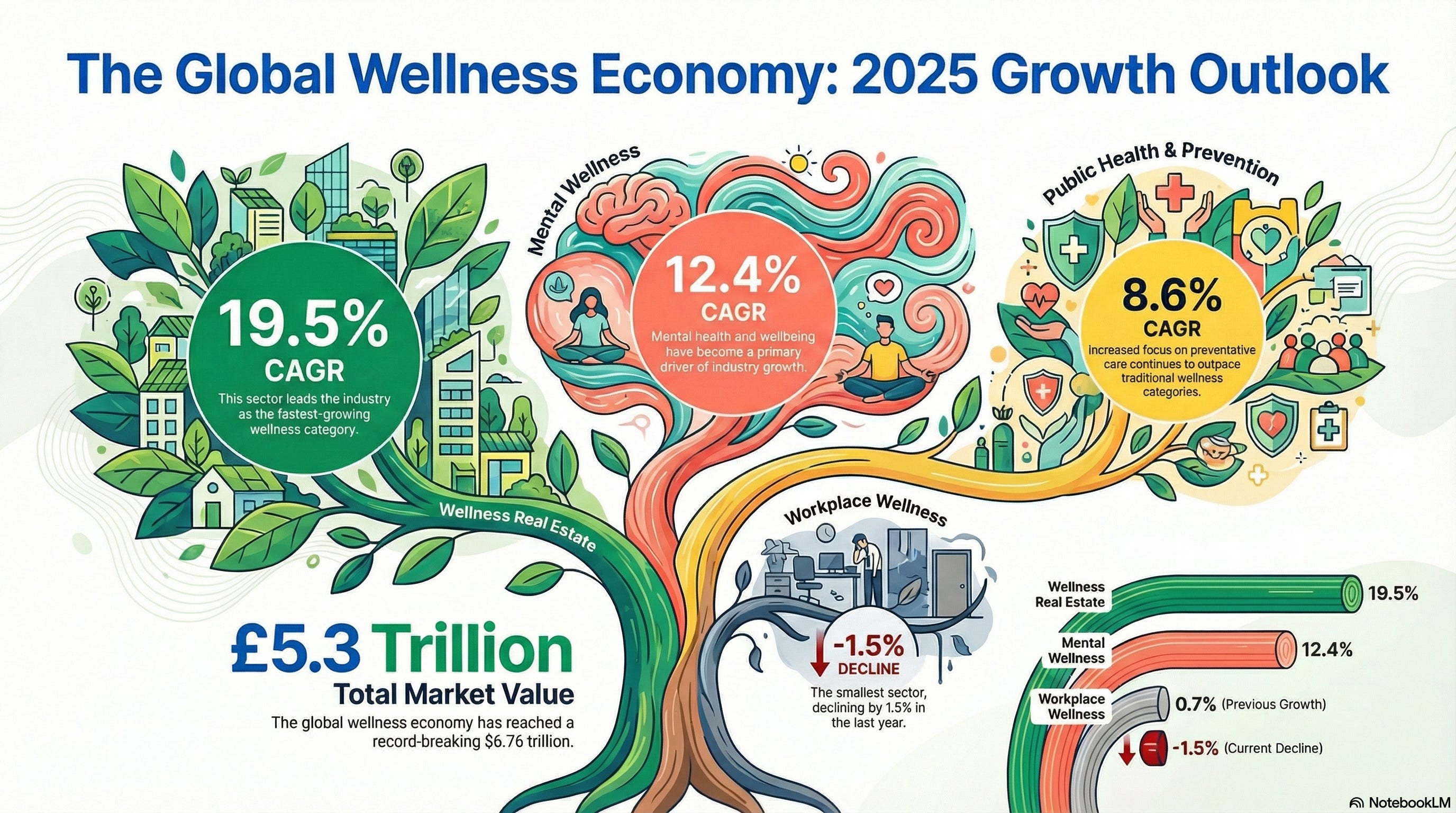
The global workplace wellness market — the sector that should be absorbing this talent — contracted 1.5% last year.
From $54.1 billion to $53.3 billion.
It is the smallest of all 11 wellness sectors tracked by the Global Wellness Institute, and the slowest-growing at 0.7% compound annual growth over the past five years (GWI Economy Monitor 2025).
Only 9.8% of employed workers globally benefit from any workplace wellness program.
That is 349 million people out of 3.56 billion. With a B.
The number went down from 10.1% the year before.
Companies are not cutting wellness because they stopped caring about their people.
They are cutting it because the programs they bought could not prove they worked.
The RAND Corporation’s analysis found no statistically significant reduction in healthcare costs from standard wellness programs.
The GWI itself noted “growing employer recognition that there is a lack of strong research evidence to show programmatic workplace wellness spending is effective.”
A meditation app will not offset 12 hours of stacked meetings.
A yoga class will not counteract chronic unpredictability.
A gym stipend will not fix workloads that make using it impossible.
Everyone in the boardroom knows the truth.
The programs being sold do not address the problems companies actually have.
At the same time, Gallup’s 2025 State of the Global Workplace report showed employee engagement fell to 21% — down from 23% — costing an estimated $438 billion in lost productivity globally.
And 70% of team engagement is attributable to the manager, not the program.
So you have a $6.76 trillion wellness economy producing excellent practitioners who cannot sustain a career, feeding into a corporate wellness market that is actively contracting because it cannot demonstrate value.
The supply is there.
The demand is there.
The connection between them is broken.
This is a positioning problem, not a supply problem
I have sat on both sides of this.
I spent 10,000 hours on a gym floor and coached over 1,500 people online.
I know what it feels like to trade every hour for income and wonder how long you can sustain it.
And I have sat inside budget meetings where wellness proposals were rejected before the third slide because the language was wrong.
The professionals I have watched fail at breaking into corporate—and I have watched many—failed because they pitched the modality instead of the outcome.
They sent proposals that said “employee wellbeing program.”
The CFO read it as “discretionary spend.”
Conversation over.
The ones who got in reframed the same work entirely.
“Workforce resilience infrastructure.”
“Cognitive protection protocol.”
“Fatigue risk management.”
Different language. Same work.
Different budget line. Different room.
The wellness industry trained an entire generation to be exceptional at changing someone’s health.
It never trained them to change a budget line.
That is not their failure.
That is the industry’s failure.
And it is fixable.
Faster than another 12-month certification.
What follows is the version of this argument I make when no one outside the room is listening
The one sentence that moves your proposal from HR’s budget to the C-suite’s.
The exact script for when a CFO asks, “What does doing nothing cost us?”—word for word.
And three AI prompts that rewrite your entire positioning in 90 seconds.
And a free copy of The Evergreen Company when it launches.
Paid subscribers only. Less than 1 AED a day.
Keep reading with a 7-day free trial
Subscribe to Wellness Intelligence to keep reading this post and get 7 days of free access to the full post archives.